
Why does this matter?
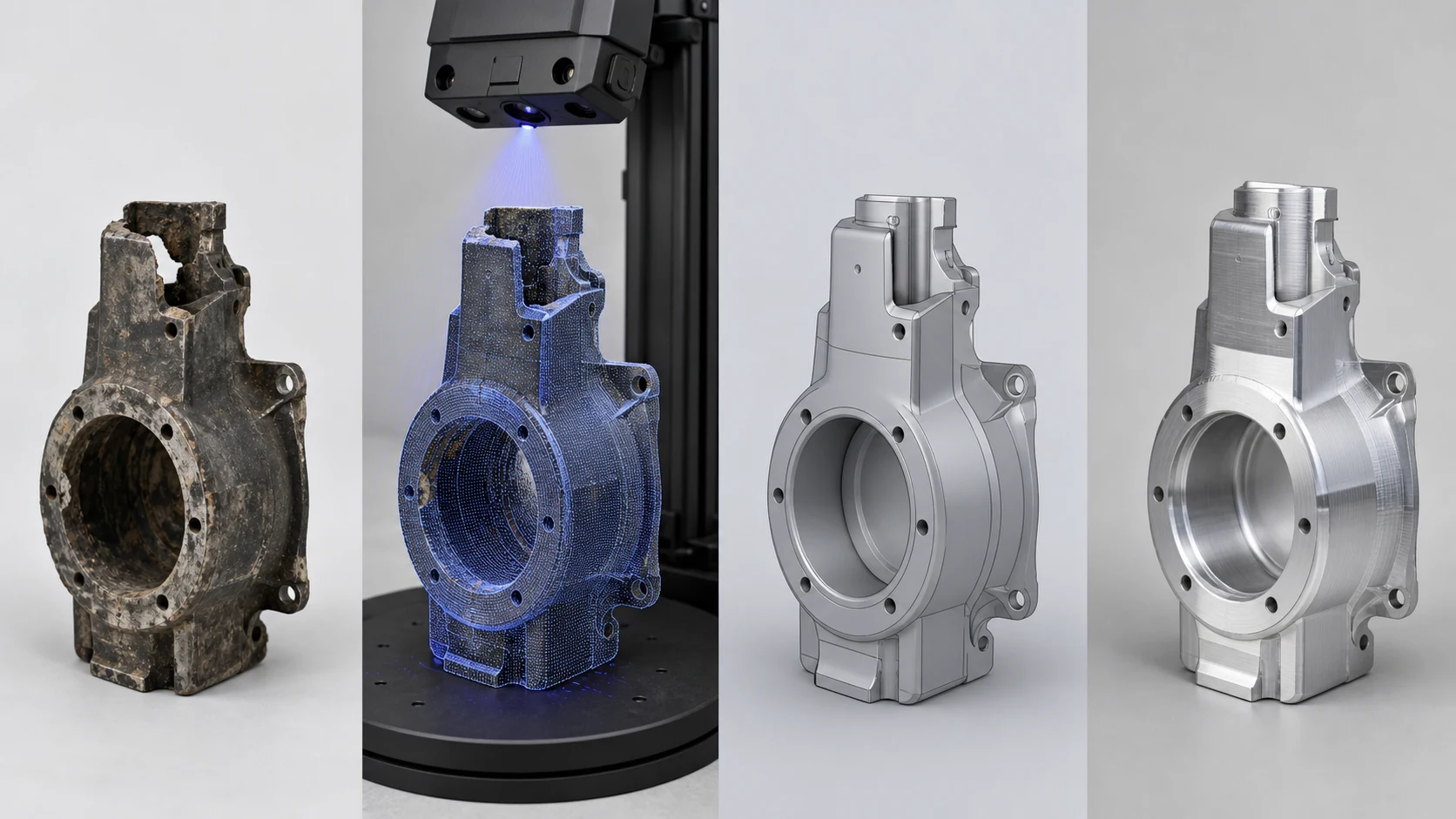
Reverse engineering is not simply copying the surface in front of you; it is recovering what the part is supposed to do. Sample condition, wear, mating parts and critical dimensions need to be considered together.
What should you check?
- Condition of the physical sample, photos and machine context
- Part function, mating components and functional relationships
- Material, surface condition and relevant material behavior
- Critical dimensions, tolerances and required accuracy level
A practical evaluation sequence
Start by understanding what the part does and which surfaces it interacts with, then separate the geometry that exists today from the nominal geometry that should exist. Measurement or scan data becomes manufacturable only when it is interpreted in that functional context.
Common mistakes
- Treating worn or broken surfaces as nominal geometry
- Copying the sample without checking mating parts, datums and assembly relationships
- Focusing on dimensional similarity while ignoring material and service conditions
The objective is not a blind replica of the sample; it is verified manufacturing data for a part that can perform the required function reliably.
What should you send for evaluation?
- Condition of the physical sample, photos and machine context
- Part function, mating components and functional relationships
- Initial quantity and likely repeat or series-production volume
- Technical drawing, datums, dimensions and available measurement results
Where can Gizmak help?
For reverse engineering, we work from the existing part or available data and confirm the technical basis before production.
Reverse engineering