
Why does this matter?
Material choice affects machining time, tool wear, finishing and total cost as well as performance. Selecting by catalogue strength alone without understanding service conditions is rarely a good decision.
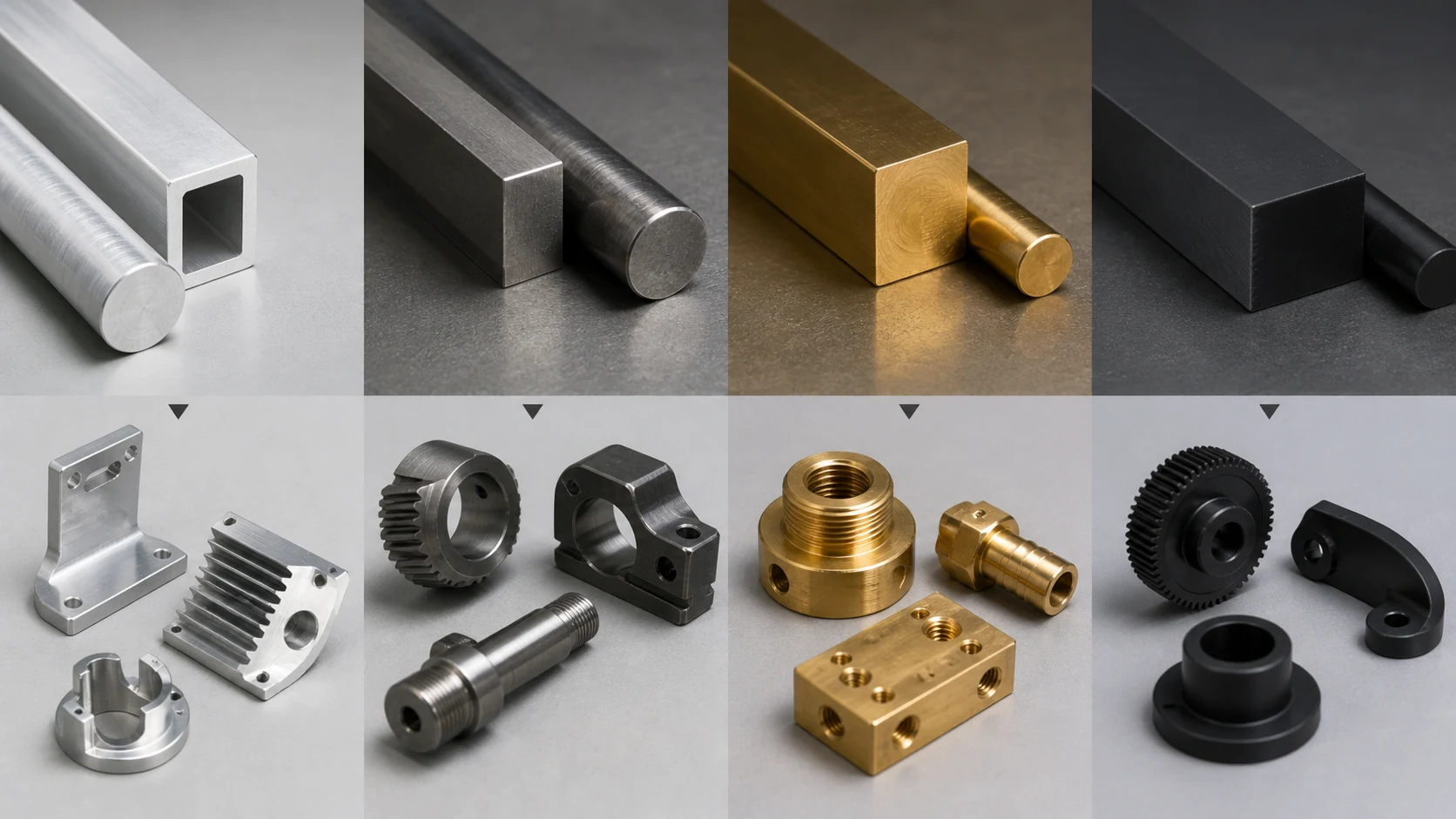
What should you check?
- Material, surface condition and relevant material behavior
- Special operations that drive cost and opportunities to simplify
- Operating environment, loads, temperature and service conditions
- Part function, mating components and functional relationships
- Machining method, tool/process stability and inspection steps
A practical evaluation sequence
Machinability is only one part of material selection. Loads, temperature, wear, corrosion, mass, electrical requirements, finishing and total cost should be considered together.
Common mistakes
- Selecting material only by price per kilogram
- Confusing a trade name with the actual material grade or specification
- Separating heat treatment, coating or service temperature from the machining decision
Decision rule
The best material is not necessarily the cheapest stock; it is the option with the lowest total functional and manufacturing risk.
What should you send for evaluation?
- Part function, mating components and functional relationships
- Operating environment, loads, temperature and service conditions
- Initial quantity and likely repeat or series-production volume
- Technical drawing, datums, dimensions and available measurement results
Where can Gizmak help?
We review critical surfaces, dimensions and repeatability alongside the manufacturing method and inspection plan.
Precision machining