
Why does this matter?
Manufacturing cost is often the sum of small design decisions. Evaluating setups, critical tolerances, tool access, quantity and inspection early can preserve function while reducing cost.
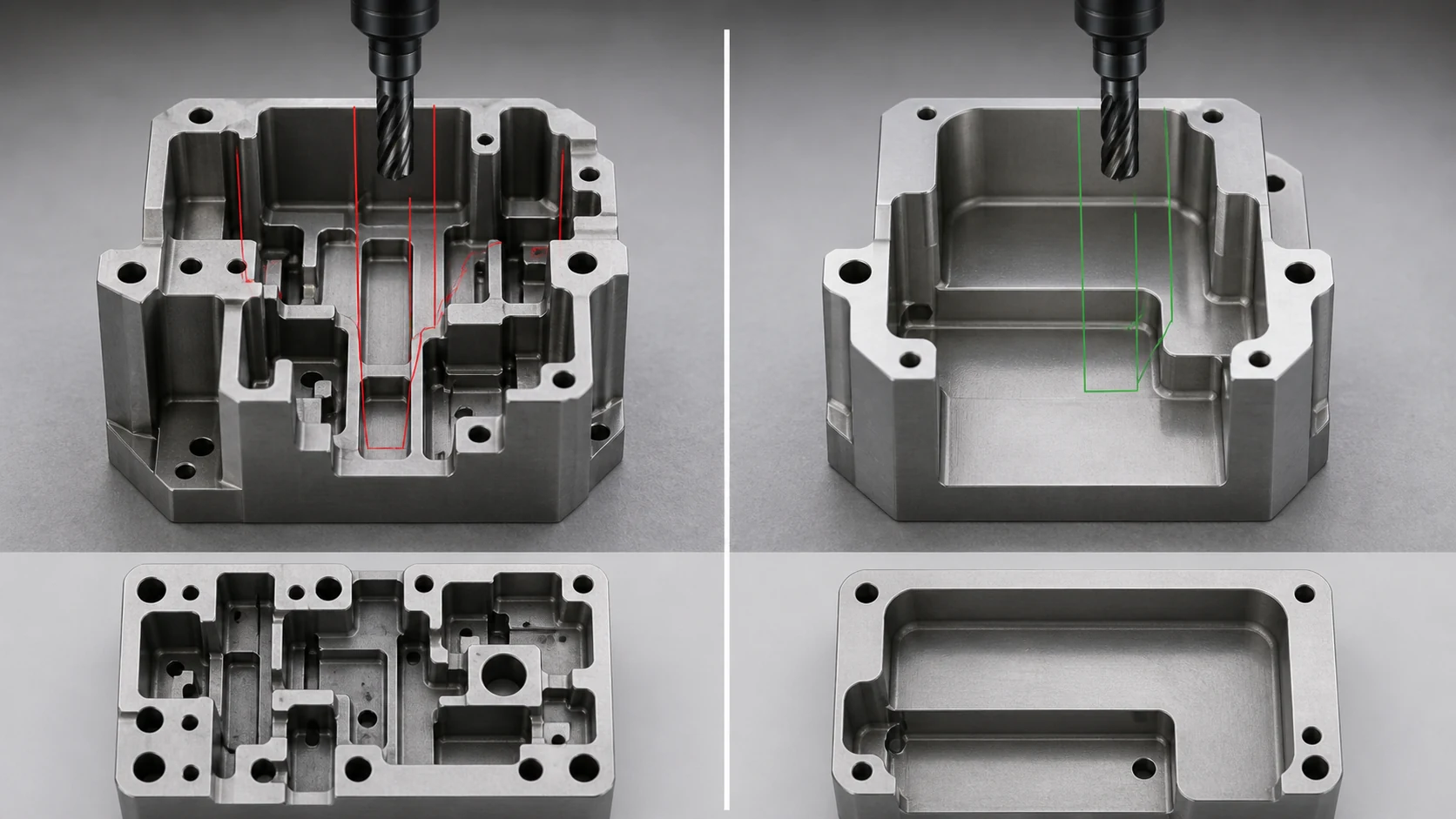
What should you check?
- Critical dimensions, tolerances and required accuracy level
- Number of setups, operation sequence and programming/preparation effort
- Geometry, access, tool approach and critical form features
- Material, surface condition and relevant material behavior
- Special operations that drive cost and opportunities to simplify
A practical evaluation sequence
Manufacturing cost is more than cutting time. Programming, setup, workholding, tooling, material, inspection, secondary processes and quantity all matter, and small design choices can change total cost significantly.
Common mistakes
- Assuming part weight is the main driver of price
- Comparing prototype pricing directly with repeat-production unit pricing
- Missing the cost impact of unnecessary tolerances, deep pockets or special finishes
Decision rule
The safest cost reduction removes manufacturing difficulty that adds no functional value rather than randomly relaxing quality.
What should you send for evaluation?
- 3D CAD/mesh data, revision status and required output format
- Technical drawing, datums, dimensions and available measurement results
- Initial quantity and likely repeat or series-production volume
- Critical dimensions, tolerances and required accuracy level
Where can Gizmak help?
We review critical surfaces, dimensions and repeatability alongside the manufacturing method and inspection plan.
Precision machining