
Why does this matter?
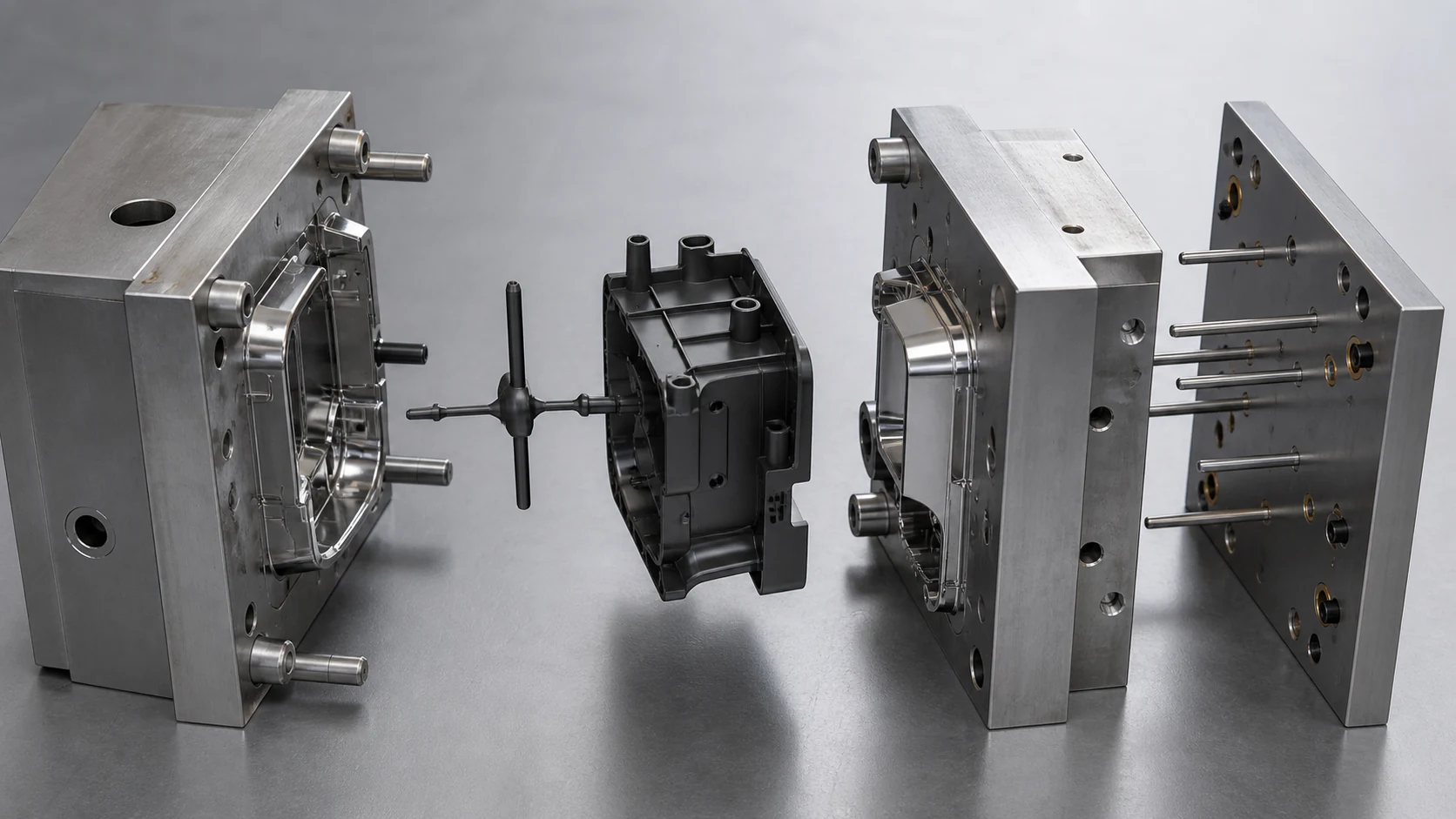
Mold success is not determined by steel or machining quality alone. Part geometry, polymer behavior, parting/ejection, surface expectations and target volume should be considered from the start.
What should you check?
- 3D CAD/mesh data, revision status and required output format
- Material, surface condition and relevant material behavior
- Surface roughness, appearance and edge/burr requirements
- Initial quantity and likely repeat or series-production volume
- Geometry, access, tool approach and critical form features
A practical evaluation sequence
Mold evaluation starts with the 3D part geometry but does not end there. Polymer, shrink behavior, parting strategy, ejection, cosmetic surfaces, target volume and likely revisions need to be considered together.
Common mistakes
- Sending only the part CAD while omitting material and target-volume information
- Defining critical cosmetic surfaces and parting-line expectations too late
- Moving prototype geometry straight into tooling without a moldability review
Decision rule
A useful mold quotation considers not only steel and machining, but how the part will be molded throughout the intended tool life.
What should you send for evaluation?
- 3D CAD/mesh data, revision status and required output format
- Material, surface condition and relevant material behavior
- Initial quantity and likely repeat or series-production volume
- Surface roughness, appearance and edge/burr requirements
Where can Gizmak help?
For mold projects, we review part geometry, intended use and manufacturing method at the outset.
Mold manufacturing