
Why does this matter?
The real issue is often not whether the machine can reach the feature, but whether the part and tool remain stable while cutting it. Dimensions that look fine on paper can become difficult when rigidity is ignored.
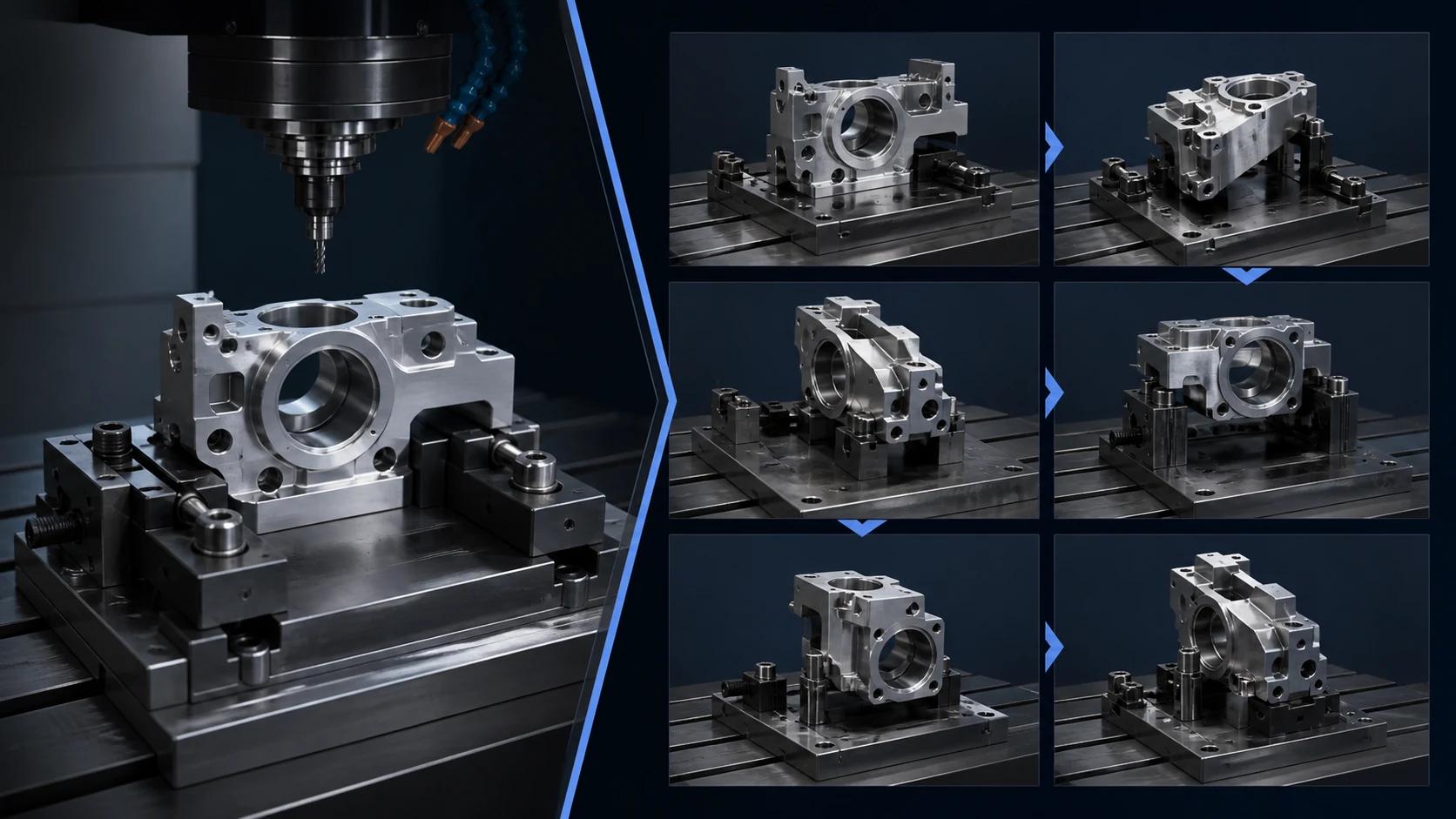
What should you check?
- which features are truly critical
- impact of setup, fixturing and secondary processes
- how cost structure changes with quantity
- where unnecessary complexity can be removed
A practical evaluation sequence
For these parts, stiffness matters as much as geometry. Tool overhang, workholding, cutting force and operation order need to be considered together to avoid drift, chatter and unnecessary cycle time.
Common mistakes
- Ignoring chatter and deflection when tool reach becomes long
- Clamping a thin-wall part as if it were a rigid block
- Treating setup count only as a time calculation
Decision rule
Stable machining comes from treating geometry, tooling and workholding as one system.
What should you send for evaluation?
- available CAD, drawing or physical sample details
- critical dimensions, tolerances or fit expectations
- material and any finishing/heat-treatment requirement
- target quantity, lead-time expectation and use case
Where can Gizmak help?
For prismatic parts and technical features, we assess milling against the drawing, material and quantity.
CNC milling