
Why does this matter?
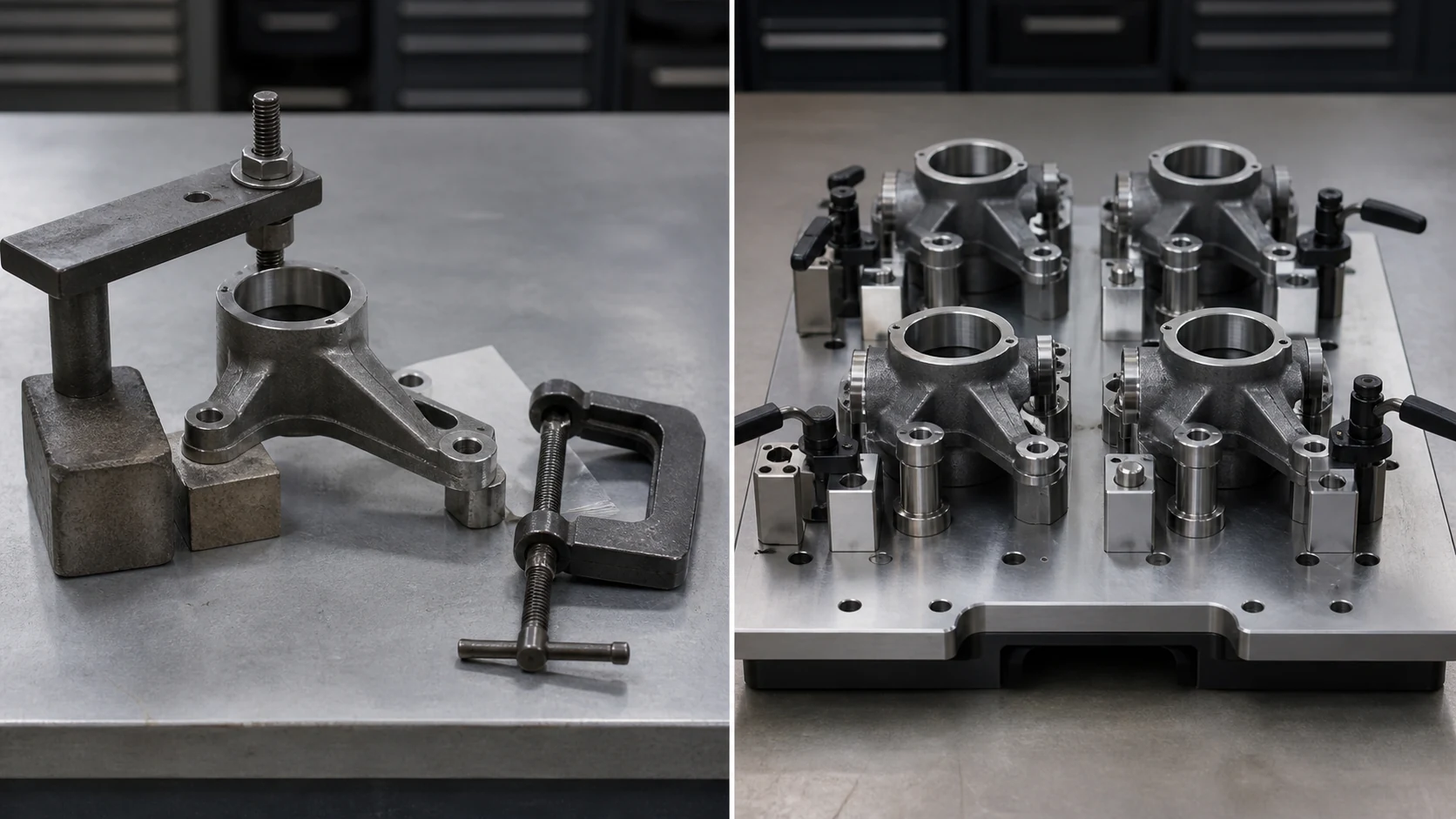
Choosing a CNC process is not just choosing a machine. Workholding, tool access, operation sequence and inspection strategy interact, affecting both quality and cycle time.
What should you check?
- Part stability, repeatability and need for dedicated fixturing
- Number of setups, operation sequence and programming/preparation effort
- Geometry, access, tool approach and critical form features
- Initial quantity and likely repeat or series-production volume
- Technical drawing, datums, dimensions and available measurement results
A practical evaluation sequence
Read the geometry in terms of tool access, workholding and datum relationships first. Then evaluate setup count, machine axes, tool strategy and inspection together; process choice should not be based on axis count alone.
Common mistakes
- Using machine-axis count as a stand-alone indicator of quality or cost
- Ignoring tool access and workholding rigidity during geometry review
- Carrying a one-off setup unchanged into repeat production
Decision rule
The best process is the one that produces the required quality repeatably with the fewest unnecessary setups and operations.
What should you send for evaluation?
- 3D CAD/mesh data, revision status and required output format
- Initial quantity and likely repeat or series-production volume
- Critical dimensions, tolerances and required accuracy level
- Number of setups, operation sequence and programming/preparation effort
Where can Gizmak help?
We set fixture and jig requirements around the part to support repeatable positioning and safe machining.
Fixtures and jigs